The Role of Technology in Education—A New Era Begins
The Main Hero Image (For the Article Header)
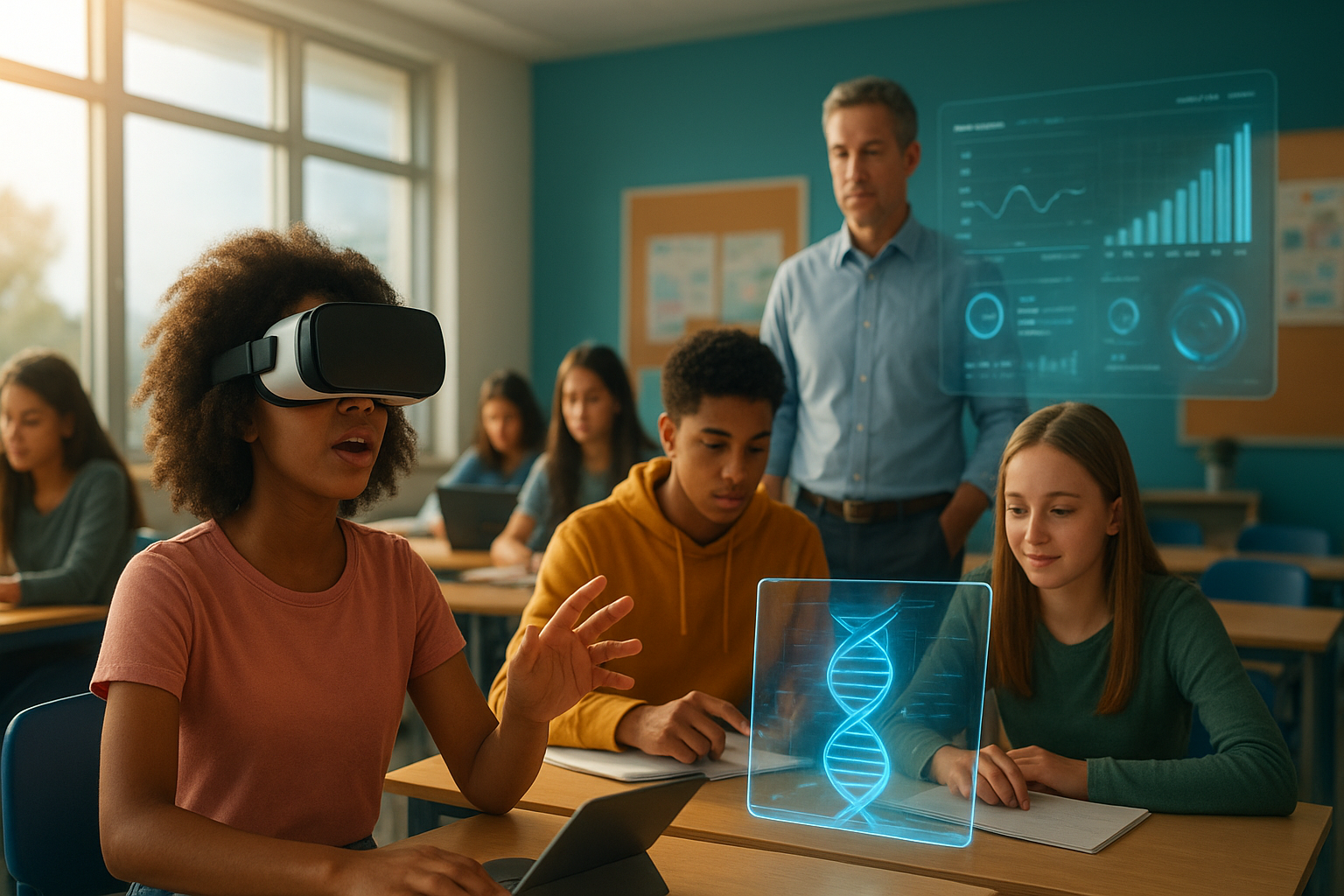
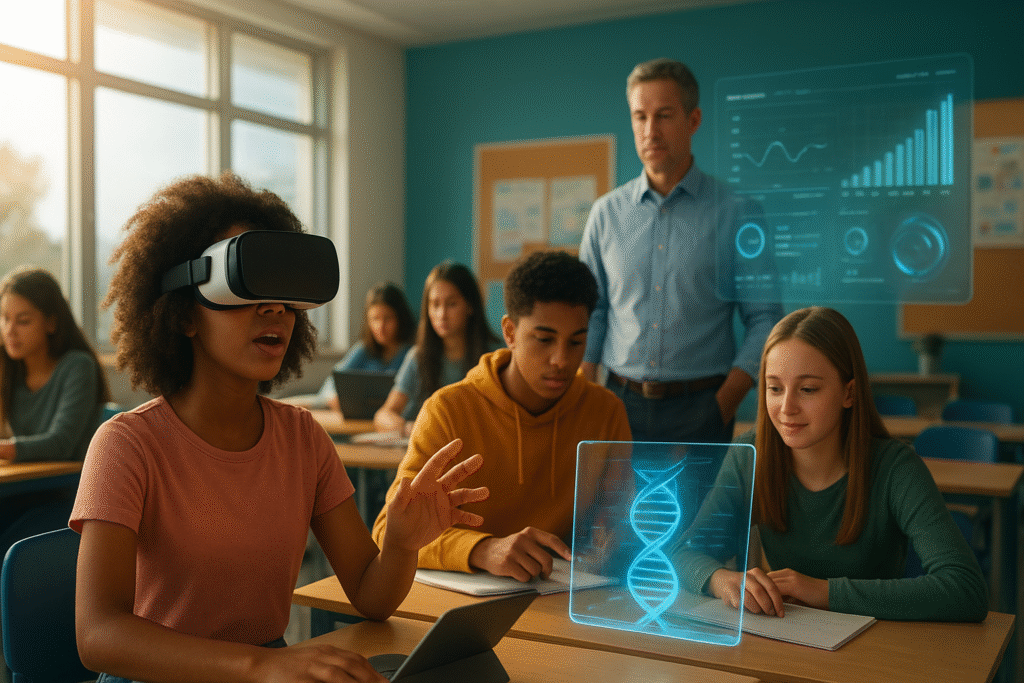
Thank you for reading this post, don't forget to subscribe!Imagine stepping into a classroom where every lesson feels like a tailored adventure—history comes alive via VR, AI tutors offer real-time feedback, and learners from anywhere in the world collaborate seamlessly on shared projects. This isn’t a scene from science fiction—this is the role of technology in education in 2025, and the transformation is just getting started.
With digital innovation moving at breakneck speed, the education sector stands at the forefront of change. The way students learn, teachers instruct, and institutions operate is fundamentally shifting. But what exactly does this new landscape look like? How are students, educators, and technology working together to create a future where learning is more personal, accessible, and effective than ever before?
How Far We’ve Come: A Snapshot of Tech-Driven Education
From Simple Tools to Intelligent Systems
In the early days, educational technology meant interactive whiteboards or simple eBooks—useful but limited in scope. Now, tech in the classroom is about creating engaging, adaptive, and data-driven experiences. Here’s a quick table comparing the basics of yesterday with the cutting edge of today:
As this table indicates, technology’s role in education now impacts nearly every touchpoint—blending innovation with proven pedagogy for powerful results.
Key Insights: The Game-Changers Driving Modern Education
1. Personalized Learning Through AI
Personalized learning was once a goal—now it’s a daily reality for millions of students. AI-driven platforms analyze strengths, weaknesses, and learning paces, delivering content tailored to each student’s needs. Imagine a 10-year-old getting instant feedback on math puzzles, or a high schooler tackling creative writing prompts crafted for their skill level.
- AI identifies gaps in real time, guiding students through practice problems just as a personal tutor would.
- Adaptive assessments allow students to progress at their own pace, boosting confidence and retention.
- Teachers use AI-powered analytics to design interventions and provide extra support to those struggling before problems escalate.
2. Immersive and Gamified Experiences
A history lesson becomes a virtual expedition to Ancient Rome; biology transforms into interactive 3D exploration. In 2025, immersive tech means learning by doing—not just reading. Augmented Reality (AR) and Virtual Reality (VR) are no longer novelties, but standard tools in the modern classroom.
- Students report higher motivation and deeper understanding with VR-enabled lessons.
- Gamified learning—quizzes, badges, leaderboards—taps into natural curiosity and makes complex concepts memorable.
3. The Evolution of Credentials: Micro-Learning and Digital Badges
Traditional degrees are still valuable, but technology is unlocking new ways to showcase skills.
- Micro-credentials and digital badges allow students to demonstrate competencies as they learn.
- Employers and schools increasingly recognize these stackable credentials, enabling dynamic, flexible career pathways.
4. Hybrid and Flexible Learning Models
The “classroom” of 2025 has no walls. Blended or hybrid learning models combine in-person sessions with online modules—granting flexibility and access like never before.
- Students learn when and where they want, using a mix of live classes, pre-recorded materials, and virtual study groups.
- Digital access breaks down barriers for rural, differently-abled, or remote learners, expanding educational equity.
5. Data-Informed Teaching: Learning Analytics
Learning analytics transform raw data into actionable insight. Teachers can pinpoint exactly where students struggle, predict who might need extra help, and refine lesson plans with confidence.
- Real-time dashboards make progress transparent for teachers, students, and parents alike.
- Analytics-driven strategies foster better outcomes and greater accountability across schools.
6. Secure, Inclusive, and Ethical Technology
As online platforms proliferate, data privacy and digital well-being are becoming top priorities.
- EdTech providers now build in strong encryption, parental controls, and monitoring tools to keep students safe.
- Equitable design ensures accessibility for all, with adaptive features for different learning styles, languages, and abilities.
Personal Experiences and Classroom Stories
Teachers at the Forefront
Teachers in 2025 are becoming learning engineers—navigating new tools, designing digital content, and providing mentorship within and beyond the classroom walls. Many describe the initial learning curve with new technology, but also highlight the benefits:
- “With AI, I can finally help every student—not just the squeaky wheels or the strugglers. I get alerts if someone slips, and can adapt my teaching on the fly.”
- “Gamified lessons transformed my science class. Students are more engaged, and it’s easier to track who needs help before they fall behind.”
Students Thrive with Flexibility
Students frequently rave about interactive, tech-powered lessons:
- “History class doesn’t feel boring now that we can time-travel with VR. I still remember the Roman forum tour.”
- “The learning app quizzes me every time I get something wrong until I nail it. I never thought I could actually like math.”
Data and Trends in 2025: The Numbers Speak
Challenges and Considerations
No transformation is without hurdles. The rapid tech shift in education brings challenges—digital divide, device access, screen time concerns, and the need for digital literacy and professional development.
- Students in underserved communities risk getting left behind without reliable tech access.
- Privacy, data ethics, and the risk of algorithmic bias demand continuous oversight and transparent practices.
- Keeping teacher training current is essential; new tools require ongoing adaptation and support.
The Road Ahead—What’s Next for the Role of Technology in Education?
Educational technology’s next horizon will spotlight even deeper integration with AI, smart devices, multi-sensory learning environments, and global “learning without boundaries.”
Imagine:
- AI tutors that detect not just knowledge gaps, but mood and motivation—offering support beyond rote instruction.
- Digital portfolios and skills transcripts that move seamlessly across schools and employers.
- Education as a lifelong, iterative process—supported by community, context, and ever-evolving digital ecosystems.
Conclusion: Embracing the Future Today
Technology’s role in education in 2025 is not merely about hardware or software, but about empowering people. It is the spark that makes learning more personal, engaging, and equitable. The coming years promise even greater change—but the mission remains the same: preparing learners not just for exams, but for life.
